
 English
 ไทย
 မြန်မာ
 中文
 العربية
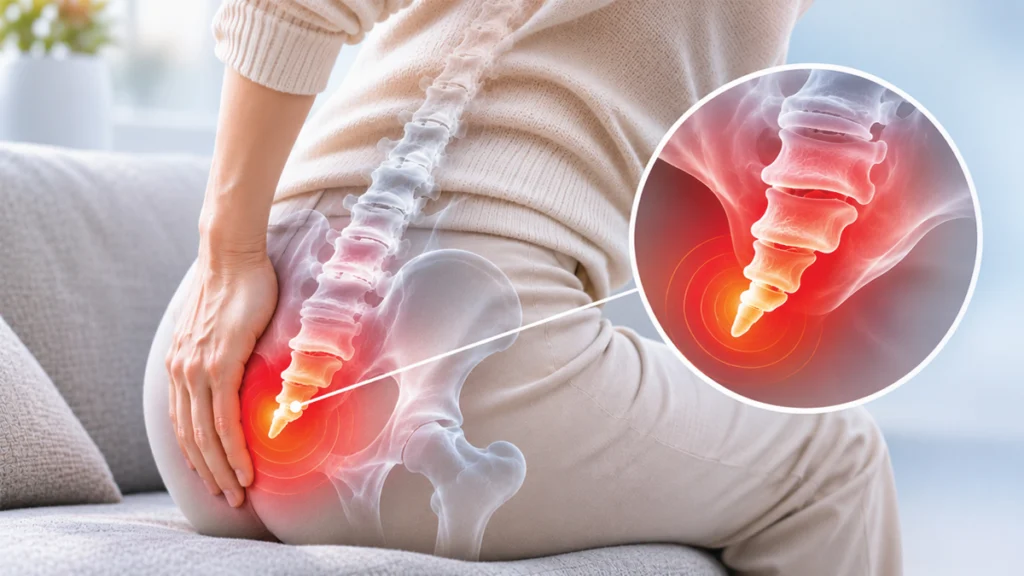
To understand the matter.อาการปวดก้นกบ From causes and symptoms to diagnosis and treatment approaches, by a team of pain specialists at Sapiens Hospital.
อาการปวดก้นกบ: ภาพรวมและแนวทางการดูแลทางการแพทย์
อาการปวดก้นกบ (Coccydynia หรือ Coccygodynia) คือภาวะปวดเฉพาะจุดบริเวณปลายสุดของกระดูกสันหลัง ซึ่งผู้ป่วยหลายคนมักเข้าใจผิดว่าเป็นอาการ ปวดหลังล่าง หรืออธิบายอาการเบื้องต้นว่า เจ็บตูด หรือปวดร่องก้นลึก ๆ แม้พบได้น้อยกว่าอาการปวดคอหรือปวดหลังทั่วไป แต่ส่งผลกระทบต่อการใช้ชีวิตประจำวันอย่างมาก ผู้ป่วยมักมีอาการปวดตื้อลึกขณะนั่ง ขับรถ หรือลุกจากเก้าอี้ จนไม่สามารถนั่งท่าปกติได้นานและต้องนั่งเอียงตัวเพื่อเลี่ยงแรงกดทับ
Because the sacral region is a complex anatomical hub encompassing bones, joints, muscles, ligaments, pelvic tissues, and a network of nerves, identifying the source of pain (pain generator) requires evaluation by a pain specialist to differentiate conditions and plan targeted treatment.
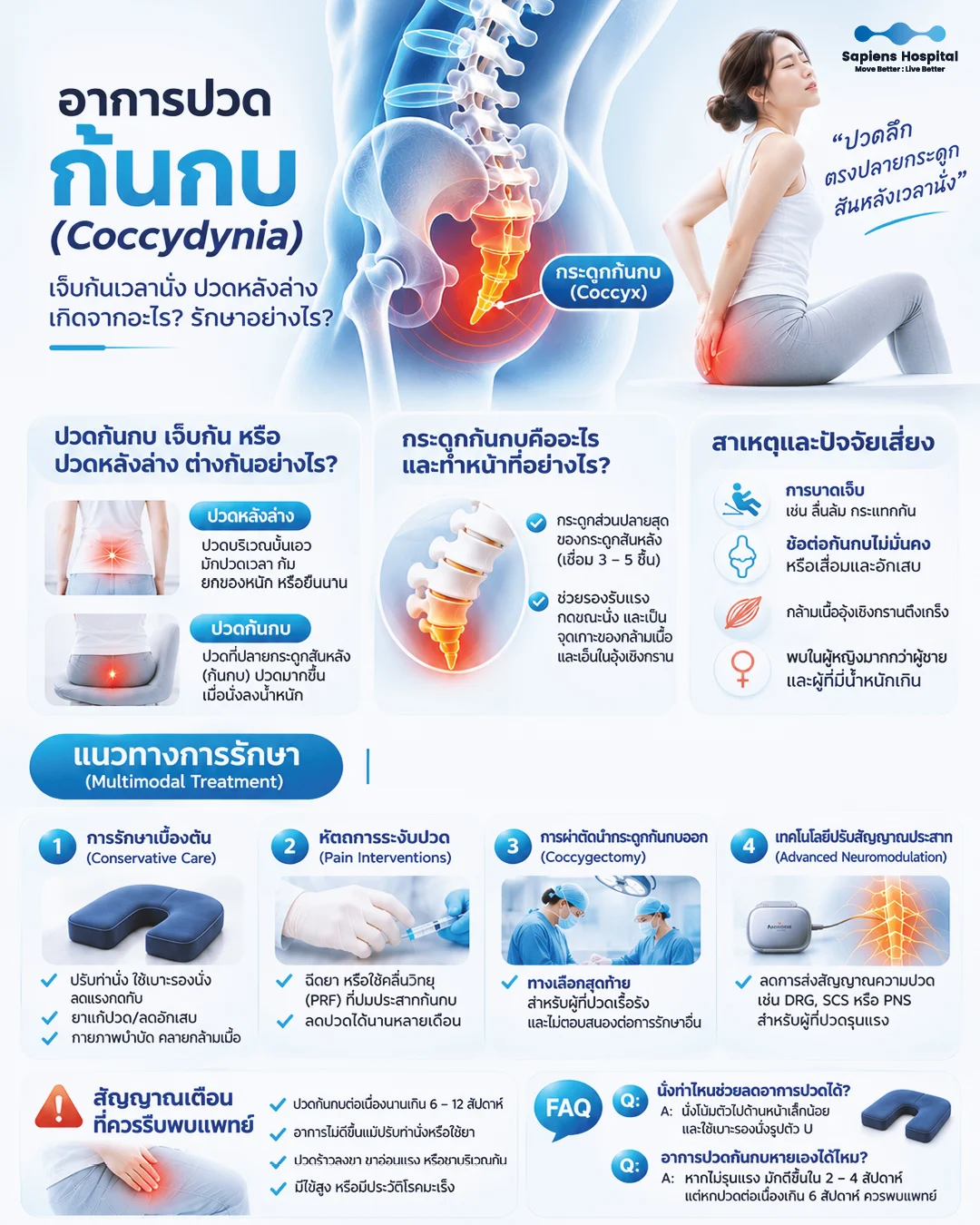
What are the differences between tailbone pain, buttock pain, and lower back pain?
ผู้ป่วยจำนวนมากมักสับสนระหว่าง อาการปวดหลังล่าง (Low Back Pain) กับ อาการปวดก้นกบ (Tailbone Pain) เนื่องจากตำแหน่งอยู่ใกล้เคียงกัน สามารถสังเกตความแตกต่างเบื้องต้นได้ดังนี้:
- ตำแหน่งที่ปวด: อาการปวดหลังล่างจะปวดบริเวณบั้นเอวเหนือร่องก้นขึ้นไป ส่วนอาการปวดก้นกบจะเจ็บลึกอยู่ตรงจุดปลายสุดของกระดูกสันหลังบริเวณกึ่งกลางร่องก้น (จุดที่คนไข้มักเรียกว่าเจ็บตูดหรือเจ็บก้นกบ)
- พฤติกรรมที่กระตุ้นให้ปวด: อาการปวดหลังล่างมักปวดเวลา ก้ม ยกของหนัก หรือยืนนาน ๆ แต่ อาการปวดก้นกบจะปวดรุนแรงขึ้นทันทีเมื่อนั่งลงน้ำหนัก โดยเฉพาะการนั่งบนเก้าอี้พื้นแข็ง การเอนหลังพิงพนัก หรือจังหวะที่กำลังลุกขึ้นยืนจากท่านั่ง
What is the coccyx and what is its function?
กระดูกก้นกบ (Coccyx) คือกระดูกชิ้นเล็กส่วนปลายสุดของแนวกระดูกสันหลัง เกิดจากการเชื่อมรวมกันของกระดูกชิ้นย่อย 3–5 ชิ้น อยู่ใต้กระดูกกระเบนเหน็บ (Sacrum) มีหน้าที่สำคัญ 2 ประการ ได้แก่:
- รองรับและกระจายแรงกดทับ ของร่างกายส่วนบนขณะนั่ง
- เป็นจุดเกาะยึดหลัก ของกล้ามเนื้อลาย เอ็นยึดข้อ และพังผืดส่วนล่างของอุ้งเชิงกราน
When these structures become inflamed, injured, or imbalanced, they trigger intense pain nerve impulses that spread immediately when weight is applied.
Causes and risk factors of coccyx pain.
- การบาดเจ็บโดยตรง (Trauma): เป็นสาเหตุที่พบบ่อยที่สุด เช่น ลื่นล้มก้นกระแทกพื้น อุบัติเหตุทางรถยนต์ กีฬาที่มีแรงปะทะ หรือการบาดเจ็บหลังคลอดบุตรทางช่องคลอด
- ภาวะข้อต่อก้นกบไม่มั่นคง (Coccygeal Instability): กระดูกก้นกบขยับเคลื่อนไหวมากเกินปกติ (Hypermobility) หรือเคลื่อนผิดตำแหน่งชั่วคราว (Subluxation) ทำให้เกิดการเสียดสีและเจ็บตูดซ้ำ ๆ ทุกครั้งที่นั่ง
- ข้อต่อเสื่อมและอักเสบ: ความเสื่อมสภาพของข้อต่อก้นกบตามวัย คล้ายภาวะข้ออักเสบในส่วนอื่นของร่างกาย
- ความผิดปกติของกล้ามเนื้ออุ้งเชิงกราน: ภาวะกล้ามเนื้อเกร็งตึงเรื้อรังหรือพังผืดอักเสบ เช่น Pelvic Floor Dysfunction หรือ Myofascial Pain Syndrome ซึ่งอาจทำให้ปวดร้าวเชื่อมโยงไปยังบริเวณหลังล่างและสะโพกได้
- ปัจจัยเสี่ยงทางกายภาพ: พบใน ผู้หญิงมากกว่าผู้ชายหลายเท่าตัว เนื่องจากสรีระเชิงกรานที่กว้างกว่าและประวัติการคลอดบุตร รวมถึงผู้ที่มี ภาวะน้ำหนักตัวเกินมาตรฐาน ซึ่งเพิ่มแรงกดแนวดิ่งต่อปลายก้นกบขณะนั่ง
Why are the X-ray results normal, but the tailbone pain persists?
การตรวจภาพรังสีเอกซเรย์ทั่วไป (Plain X-ray) แสดงผลได้เพียงโครงสร้างกระดูกขนาดใหญ่ว่ามีการแตกหักหรือร้าวหรือไม่ แต่ ไม่สามารถตรวจจับความผิดปกติเชิงหน้าที่และเนื้อเยื่ออ่อน ได้ เช่น:
- Hypermobility of the tailbone
- Inflammation of the synovial membrane of small joints.
- Deeply embedded pelvic floor muscle contractions.
ผลเอกซเรย์ที่ปกติจึงไม่ได้แปลว่าไม่มีรอยโรค ในผู้ป่วยที่มีอาการเรื้อรัง แพทย์เฉพาะทางอาจพิจารณาตรวจ MRI บริเวณก้นกบและกระดูกสันหลังส่วนล่าง เพิ่มเติมเพื่อประเมินการอักเสบของเนื้อเยื่ออ่อน แยกโรคหมอนรองกระดูกหลังล่างกดทับเส้นประสาท และคัดกรองก้อนเนื้อหรือการติดเชื้อส่วนลึก ควบคู่ไปกับการซักประวัติและตรวจจุดกดเจ็บอย่างละเอียด
Multimodal Treatment Guidelines for Coccyx Pain
1. Conservative care and initial treatment for coccyx pain.
Focusing on reducing pressure and controlling inflammation in the early stages:
- ปรับพฤติกรรมการนั่ง: หลีกเลี่ยงการนั่งแช่เป็นเวลานานและพื้นเก้าอี้แข็ง แนะนำให้ใช้ เบาะรองนั่งฉลุรูก้นกบ (Coccyx Cushion) ที่ออกแบบให้มีช่องว่างตรงปลายก้นกบเพื่อตัดแรงกดทับโดยตรง ลดอาการเจ็บตูดขณะนั่งทำงานหรือขับรถ
- การใช้ยา: ใช้ยาลดการอักเสบกลุ่ม NSAIDs เพื่อลดปวดเฉียบพลัน และอาจใช้ยากลุ่มปรับสัญญาณประสาทในรายที่มีอาการปวดแสบร้าวรุนแรง
- กายภาพบำบัด: ยืดเหยียดกล้ามเนื้อสะโพกและหลังล่าง ทำ Manual Therapy จัดแนวข้อต่อ และกายภาพบำบัดเฉพาะทางอุ้งเชิงกราน (Pelvic Floor Physical Therapy) เพื่อคลายกล้ามเนื้อที่หดเกร็ง
2. Minimally invasive pain interventions.
If symptoms do not improve after 4–6 weeks of supportive care, a pain specialist may consider an outpatient procedure:
| Procedure | Mechanism of action | Effectiveness and time to see results. |
|---|---|---|
| Ganglion Impar Block | A local anesthetic mixed with an anti-inflammatory drug is injected into the sympathetic nervous system ganglion anterior to the sacrum under fluoroscopy. | ลดระดับความปวดได้ทันที 40–70% ออกฤทธิ์นานหลายสัปดาห์ถึงหลายเดือน |
| Ganglion Impar Pulsed Radiofrequency (PRF) | High-frequency radio waves are passed through the tip of a needle to modify nerve ganglia without damaging tissue (used when local anesthetic blocks are effective but pain recurs). | ยืดระยะเวลาระงับปวดได้ต่อเนื่องยาวนาน 6–12 เดือน |
3. Coccygectomy (removal of the coccyx).
เป็น ทางเลือกสุดท้าย (Last Resort) สำหรับผู้ป่วยที่มีกระดูกหักเลื่อนรุนแรง ปวดเรื้อรังจนกระทบคุณภาพชีวิตอย่างหนัก และไม่ตอบสนองต่อยาหรือหัตถการแผลเล็กทั้งหมด ทั้งนี้ อัตราความสำเร็จไม่เต็ม อย่างเต็มประสิทธิภาพ เนื่องจากผู้ป่วยบางรายอาจยังหลงเหลืออาการปวดจากพังผืดและเอ็นยึดรอบอุ้งเชิงกรานหลังแผลหาย
4. Advanced Neuromodulation Technology
For patients with severe drug-resistant cases who have failed surgery, there are now technologies available that implant low-current electrical stimulators to disrupt the pain cycle, including:
- DRG Stimulation (กระตุ้นรากประสาท Dorsal Root Ganglion)
- Spinal Cord Stimulation (SCS) (กระตุ้นไขสันหลังส่วนล่าง)
- Peripheral Nerve Stimulation (PNS) (กระตุ้นเส้นประสาทส่วนปลาย)
Warning signs that require immediate consultation with a specialist.
Almost all patients with coccyx pain can recover without surgery if the source of the pain is correctly diagnosed. You should consult a pain specialist immediately if you experience the following:
- ปวดก้นกบหรือเจ็บตูดต่อเนื่องนานเกิน 6–12 สัปดาห์
- Medication and posture adjustments have not improved symptoms, to the point where they are affecting work and driving.
- สัญญาณอันตรายร่วม (Red Flags): ปวดหลังล่างร้าวลงขา ขาอ่อนแรง ชาบริเวณรอบก้นและฝีเย็บเป็นวงกว้าง มีไข้สูงเฉียบพลัน หรือมีประวัติโรคมะเร็ง
Frequently Asked Questions about Coccyx Pain (FAQ)
Q: ปวดก้นกบตอนนั่ง นั่งท่าไหนถึงจะช่วยลดอาการปวดได้? A: ควรนั่งโน้มตัวไปด้านหน้าเล็กน้อยเพื่อถ่ายน้ำหนักลงที่ต้นขาแทนปลายก้นกบ หลีกเลี่ยงการนั่งเอนหลังพิงพนักเก้าอี้ และใช้เบาะรองนั่งรูปตัว U หรือเบาะเจาะรูตรงกลาง (Coccyx Cushion) เพื่อไม่ให้ปลายก้นกบสัมผัสพื้นเก้าอี้โดยตรง
Q: อาการปวดก้นกบสามารถหายเองได้ไหม? A: หากเกิดจากการอักเสบของกล้ามเนื้อหรือการกระแทกที่ไม่รุนแรง อาการสามารถดีขึ้นได้เองภายใน 2–4 สัปดาห์ด้วยการพักการใช้งาน หลีกเลี่ยงการนั่งนาน และประคบอุ่นหรือเย็นตามระยะอาการ แต่หากปวดเรื้อรังเกิน 6 สัปดาห์ควรพบแพทย์เพื่อตรวจวินิจฉัย
References
- White WD, Avery M, Jonely H, Mansfield JT, Sayal PK, Desai MJ. The interdisciplinary management of coccydynia: A narrative review. PM R. 2022;14(9):1143-1154. doi:10.1002/pmrj.12753.
- Benditz A, Thoma R. Coccygodynia- Diagnosis and Treatment. Dtsch Arztebl Int. 2025;122:638-644.
- Bain HL, Mabrouk A, Foye PM. Coccyx Pain. StatPearls Publishing. Updated August 2025.
- Patil S, et al. Coccydynia: A comprehensive review on etiology, radiological features and management options. J Clin Orthop Trauma. 2021;14:1-8. doi:10.1016/j.jcot.2020.07.013.
- White WD, Desai MJ. Contemporary management of coccydynia. Curr Phys Med Rehabil Rep. 2023.
- Maigne JY, Lagauche D, Doursounian L. Instability of the coccyx in coccydynia. J Bone Joint Surg Br. 2000;82(7):1038-1041. doi:10.1302/0301-620X.82B7.10436.
- Maigne JY, Pigeau I, Roger B. Magnetic resonance imaging findings in the painful adult coccyx. Eur Spine J. 2012;21(10):2097-2104. doi:10.1007/s00586-012-2202-6.
- Nathan ST, Fisher BE, Roberts CS. Coccydynia: A review of pathoanatomy, etiology, treatment and outcome. J Bone Joint Surg Br. 2010;92-B(12):1622-1627. doi:10.1302/0301-620X.92B12.25486.
- Lirette LS, Chaiban G, Tolba R, Eissa H. Coccydynia: An overview of the anatomy, etiology, and treatment of coccyx pain. Ochsner J. 2014;14(1):84-87.
- Gonnade N, Mehta N, Khera PS, et al. Ganglion impar block in patients with chronic coccydynia. Indian J Radiol Imaging. 2017;27(3):324-327. doi:10.4103/ijri.IJRI_419_16.
- Sir E, Eksert S. Ganglion impar pulsed radiofrequency versus ganglion impar block for chronic coccygodynia: A comparative study. Korean J Pain. 2019;32(4):301-306. doi:10.3344/kjp.2019.32.4.301.
- Kerr EE, Benson D, Schrot RJ. Coccygectomy for chronic refractory coccydynia: Clinical case series and literature review. J Neurosurg Spine. 2011;14(5):654-663.
- Khatri SM, et al. Neuromodulation Techniques in Chronic Refractory Coccydynia: A Narrative Review. Pain Ther. 2024;13:53-67.