 English
 ไทย
 မြန်မာ
 中文
 العربية

Total Hip Arthroplasty (THA) is an effective surgical intervention designed to relieve pain, restore hip joint range of motion, and significantly enhance the quality of life in patients suffering from severe osteoarthritis, avascular necrosis (AVN) of the femoral head, or advanced joint degeneration that impairs walking, transitioning from sit-to-stand, and basic activities of daily living.
When an orthopedic surgeon recommends joint replacement, patients commonly ask:
- How should I prepare for surgery?
- How many hours must I fast from food and water?
- Do I need to discontinue my routine medications?
- Will I need general anesthesia?
- How long does the surgery take?
- Will there be significant blood loss?
- How severe is the postoperative pain?
- How many days will I be hospitalized?
- When will I be able to walk normally again?
The good news is that modern hip arthroplasty has advanced significantly across surgical techniques, anesthesia delivery, blood preservation protocols, multimodal pain control, and early postoperative rehabilitation. As a result, the majority of patients can mobilize and begin ambulating on the same day or within the first 24 hours postoperatively, with discharge planned within 2 to 3 days if recovery proceeds uneventfully.
Although hip replacement surgery—especially Revision Total Hip Arthroplasty (Revision THA)—carries a higher risk of intraoperative blood loss than primary surgery, standardized blood conservation protocols and meticulous preoperative planning ensure that most patients undergo treatment safely.
Q&A: Preoperative Preparation: What Needs to Be Done?
Thorough preoperative preparation substantially mitigates surgical complications, lowers infection rates, minimizes blood loss, and ensures an optimal, rapid recovery trajectory.
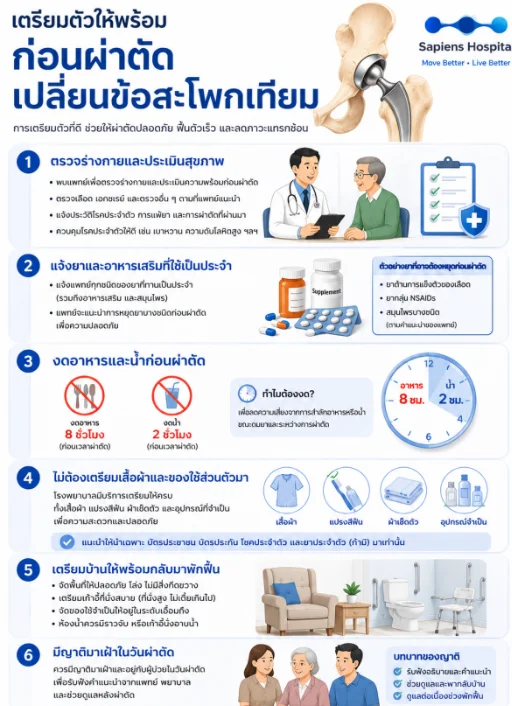
1. Preoperative Medical Evaluation and Optimization
- Prior to surgery, patients undergo a thorough clinical assessment, routinely comprising routine blood tests, an electrocardiogram (ECG), and a chest X-ray as clinically indicated.
- Optimization and stabilization of preexisting chronic medical conditions, such as diabetes mellitus, hypertension, cardiac disorders, pulmonary conditions, and renal disease, within safe clinical ranges.
- In patients presenting with preoperative anemia or cases with anticipated high blood loss such as Revision THA, the surgical team evaluates the necessity of preoperative type-and-crossmatch and blood reservation protocols.
- Active infectious foci, including urinary tract infections, odontogenic/oral infections, or open skin lesions, must be thoroughly resolved prior to surgery to minimize the risk of periprosthetic joint infection (PJI).
2. Disclosure of Routine Medications and Dietary Supplements
- Fully disclose all ongoing medications to your medical team, including prescription drugs, over-the-counter vitamins, dietary supplements, and herbal products.
- Physicians will provide clear instructions on perioperative drug cessation for agents such as anticoagulants, antiplatelets, or NSAIDs (patients must never stop or adjust prescription medications independently without medical supervision).
- Patients taking GLP-1 receptor agonists for glycemic control or weight management (e.g., semaglutide, tirzepatide) must inform the surgeon and anesthesiologist, as these agents delay gastric emptying and may necessitate tailored fasting periods or airway management protocols.
3. Preoperative Fasting Guidelines (NPO)
- Fast from solid foods for at least 8 hours prior to surgery.
- Clear liquids (such as plain water) are generally permitted up to approximately 2 hours before induction of anesthesia (to mitigate the risk of pulmonary aspiration during anesthetic induction and the surgical procedure).
4. Physical Conditioning and Home Environment Modification
- Perform prehabilitation exercises targeting hip and quadriceps strengthening under physical therapy guidance, and practice using ambulatory assistive devices in advance.
- Clear indoor pathways to create safe, unobstructed walkways free of tripping hazards, throw rugs, or cords.
- Prepare firm chairs with adequate seat height and bilateral armrests (avoid low or overly soft seating).
- Install secure bathroom grab bars or arrange for an elevated toilet seat and a stable shower chair.
- Place frequently used everyday items at waist or counter level to avoid bending or excessive reaching.
5. Patient Essentials and Caregiver Involvement
- There is no need to bring personal clothing or toiletries; comprehensive inpatient amenities are provided by the hospital. Please bring only your national identification card, insurance documentation, and current regular medications.
- A family member or primary caregiver should accompany the patient on the day of surgery to receive clinical briefings, assist during the early inpatient recovery phase, and facilitate safe discharge transport home.
Q&A: Day of Surgery: What to Expect Step-by-Step?
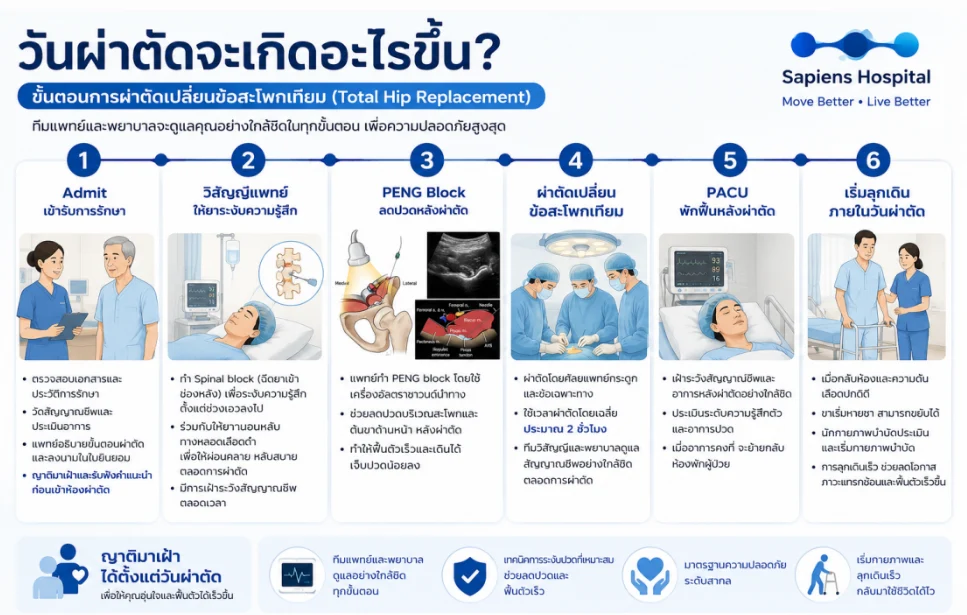
The clinical workflow on the day of Total Hip Replacement is systematically organized as follows:
- Hospital Admission: Administrative verification, chart review, baseline vital sign recording, detailed surgical consultation, signed informed consent, and caregiver counseling.
- Anesthetic Delivery: Most patients receive spinal anesthesia to achieve regional numbness from the waist down, administered alongside intravenous conscious sedation to ensure deep relaxation and comfort throughout the procedure under continuous hemodynamic monitoring.
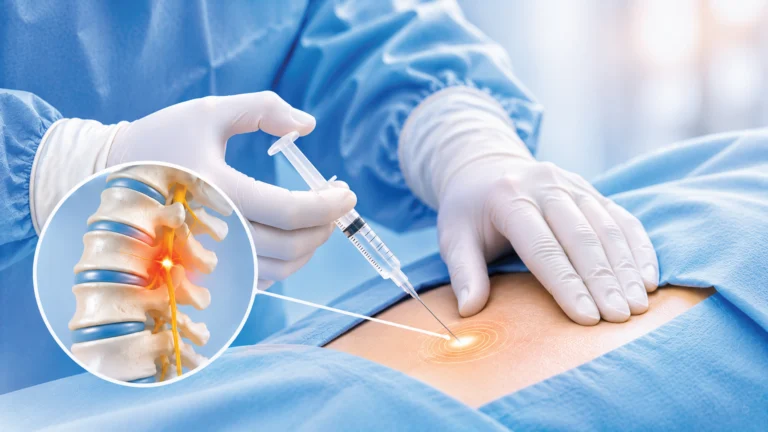
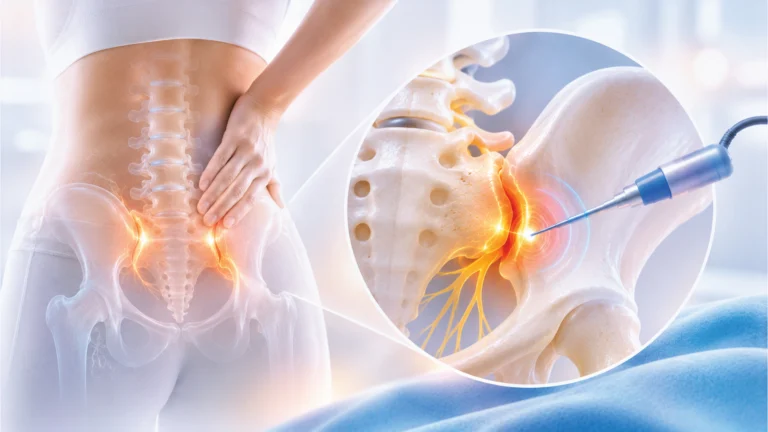
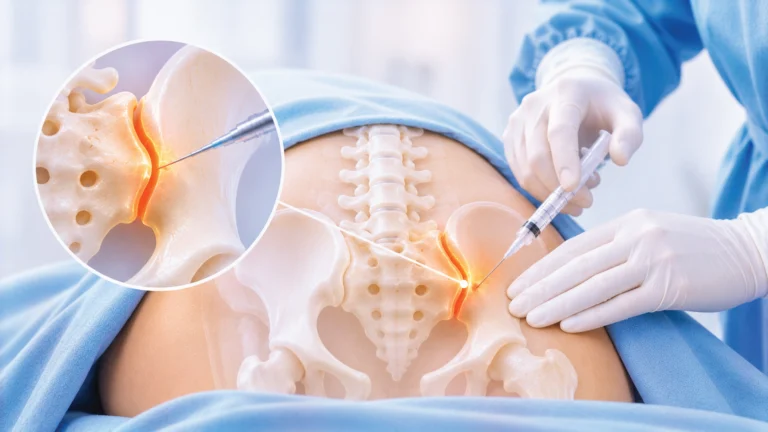
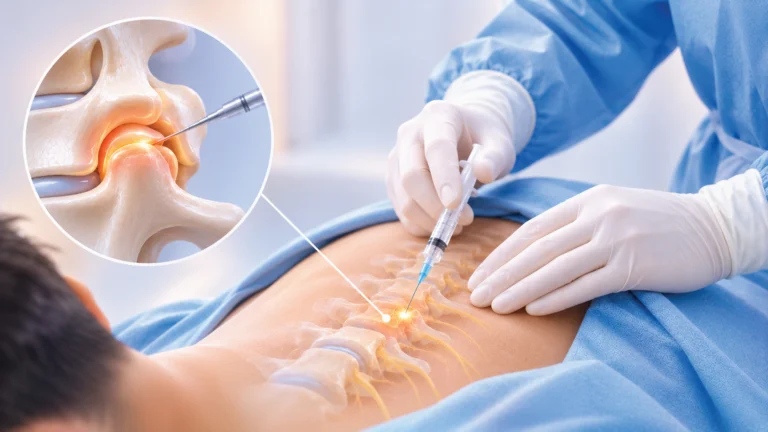
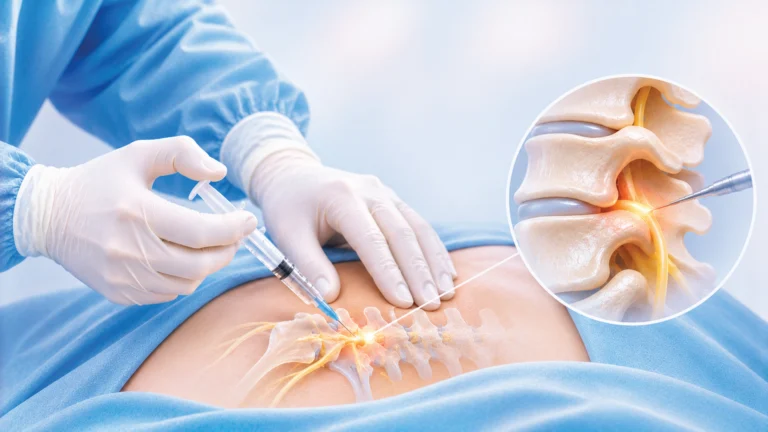
- Ultrasound-Guided PENG Block for Regional Analgesia: The clinical team performs an ultrasound-guided Pericapsular Nerve Group (PENG) block, delivering targeted local anesthetic to the articular sensory branches of the anterior hip capsule. This provides potent anterior hip and thigh pain relief, spares motor function, reduces opioid requirements, and facilitates early, comfortable mobilization.
- Prosthetic Implantation: The orthopedic joint specialist carefully resects arthritic articular surfaces and implants precision prosthetic components. Operative time averages 1.5 to 2 hours (Revision THA may require longer duration).
- Post-Anesthesia Care Unit (PACU): Continuous cardiopulmonary and clinical monitoring for approximately 2 hours. Once vital signs normalize and pain is fully controlled, the patient is transferred to their inpatient room.
- Same-Day Mobilization: Upon return to the ward, with stable hemodynamics and resolution of spinal motor block, physical therapists initiate bedside sitting, standing, and assisted ambulation using a front-wheeled walker.
Blood Loss and Transfusion Considerations
Total hip arthroplasty generally entails a higher blood loss potential than total knee arthroplasty, particularly in complex revision cases. Modern perioperative protocols employ blood preservation strategies, including the systemic administration of Tranexamic Acid (TXA), meticulous electrocautery hemostasis, and close postoperative hemoglobin surveillance. Allogenic blood transfusion is rarely needed for the majority of patients, reserved primarily for substantial intraoperative blood loss, baseline severe anemia, or significant ischemic cardiovascular comorbidities.
Q&A: Postoperative Recovery: When Can I Start Walking?
- Multimodal Pain Management: A synergistic protocol incorporating oral acetaminophen, scheduled NSAIDs/selective COX-2 inhibitors, and the residual sensory blockade from the ultrasound-guided PENG block provides exceptional pain relief while accelerating functional recovery and eliminating opioid side effects.
- Surgical Site Infection Prevention: Weight-adjusted prophylactic IV antibiotics administered within guidelines prior to incision and continued briefly postoperatively, maintained alongside strict sterile wound care.
- Venous Thromboembolism (VTE) Prophylaxis: Early mobilization, routine ankle pump exercises, mechanical compression devices (sequential compression devices), and risk-stratified pharmacologic anticoagulation as clinically indicated.
- Early Physical Rehabilitation: Inpatient physical therapy commences on the day of surgery or within the first 24 hours, assisting with transfers, sit-to-stand, walker ambulation, isometric hip abductor/quadriceps strengthening, and functional stair navigation.
(Provided that pain is well-controlled, ambulation is safe and independent with an assistive device, oral intake is tolerated, and no clinical complications occur, most patients are safely discharged home within 2 to 3 days postoperatively.)
Q&A: Recovery Timeline After Discharge
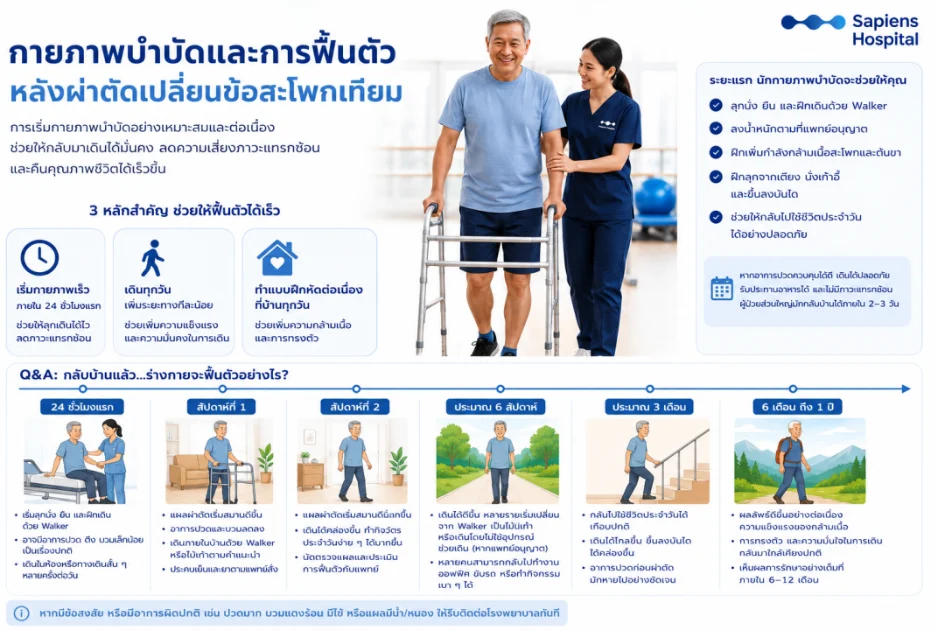
- First 24 Hours: Transition from bed to chair, stand, and initiate short-distance ambulation with a walker several times daily within the room or ward.
- Week 1: Mild postoperative ache, muscular tightness, and local edema are expected. Ambulate within the home utilizing a walker or crutches as prescribed, adhere to oral analgesics, and utilize local cryotherapy.
- Week 2: Surgical incision continues progressive epithelialization; pain and soft tissue swelling decrease noticeably. Gait fluency improves, and light instrumental activities of daily living are resumed; attend follow-up appointment for wound evaluation and clinical assessment.
- Approximately 6 Weeks: Substantial functional improvement. Many patients transition from a walker to a single-point cane or achieve unassisted ambulation (pending surgeon clearance); return to sedentary desk work, independent driving, and light low-impact activities is often permissible.
- Approximately 3 Months: Resumption of near-normal daily life, with extended walking tolerance and fluid stair negotiation. Preoperative chronic arthritic joint pain is typically resolved.
- 6 Months to 1 Year: Full recovery of dynamic muscular strength, balance, proprioception, and walking endurance, achieving maximal therapeutic clinical outcomes.
Potential Postoperative Complications
While total hip replacement demonstrates outstanding clinical success rates, potential perioperative complications include:
- Periprosthetic joint infection (PJI)
- Deep vein thrombosis (DVT) and pulmonary embolism (PE)
- Prosthetic hip dislocation or subluxation
- Periprosthetic fracture
- Leg length discrepancy (LLD)
- Long-term aseptic loosening of prosthetic components
Q&A: When to Seek Immediate Emergency Medical Attention?
Contact your surgical team or visit the emergency department immediately if you experience any of the following warning signs:
- High fever, chills, rigors, or profound systemic malaise.
- Spreading surgical wound erythema, local warmth, abnormal induration, purulent exudate, or persistent active wound drainage.
- Severe, refractory hip pain not controlled by prescribed oral analgesics.
- Calf pain, localized tenderness, or unilateral calf/lower extremity edema.
- Acute dyspnea, sudden chest pain, tachypnea, or hemoptysis.
- Sudden hip deformity, noticeable leg shortening, or inability to bear weight following a mechanical fall.
- Persistent lower extremity paresthesias, numbness, or progressive motor paresis that does not resolve after the dissipation of regional anesthesia.
Frequently Asked Questions (FAQ)
- When can I sleep on my side?: Side-sleeping can typically be initiated once the surgical incision is properly healed and baseline operative pain subsides. During the initial recovery weeks, placing an abduction pillow between the legs is advised to preserve correct hip alignment and prevent prosthetic dislocation.
- When can I resume driving?: Typically between 4 and 6 weeks postoperatively, provided full motor control, reaction time, and emergency braking ability have recovered, narcotic analgesics are discontinued, and clearance is granted by your orthopedic surgeon.
- When can I climb stairs?: Stair training begins under physical therapist guidance during the inpatient stay. Once home, stairs may be navigated utilizing a stable handrail with initial supervision from a caregiver.
- When can I travel by air?: Air travel is generally permissible once surgical wounds are fully healed and clinical clearance is provided. For medium- or long-haul flights, perform periodic calf pumps, take frequent aisle ambulation breaks, and wear graded compression stockings as instructed.
- What positions or movements must be avoided?: During the first 6 to 12 weeks (specifically for posterior approach THA), adhere to standard hip precautions:
- Avoid hip flexion beyond 90 degrees (e.g., sitting on low seats, deep squatting, bending over to pick items off the floor).
- Avoid crossing legs or ankles (hyperadduction).
- Avoid pivoting or forceful torso twisting while weight-bearing.
- Avoid excessive internal rotation of the surgical leg.
(Patients undergoing the Direct Anterior Approach [DAA] typically have fewer postoperative positional restrictions.)
Conclusion
Total Hip Arthroplasty (THA) is an exceptionally predictable, highly effective surgical procedure for eliminating joint pain and restoring pain-free mobility. Utilizing contemporary tissue-sparing techniques, ultrasound-guided PENG blocks, and multimodal recovery protocols, most patients ambulate on the same day or within 24 hours and return home within 2 to 3 days. Dedicated preoperative preparation combined with strict compliance with surgical and physical rehabilitation guidelines minimizes complication risks and ensures a confident, successful recovery.
References
- American Academy of Orthopaedic Surgeons (AAOS). Management of Osteoarthritis of the Hip: Evidence-Based Clinical Practice Guideline. Rosemont, IL: American Academy of Orthopaedic Surgeons; 2023.
- Hannon CP, Delanois RE, Nandi S, Fillingham YA, et al. American Academy of Orthopaedic Surgeons Clinical Practice Guideline Summary: Management of Osteoarthritis of the Hip. J Am Acad Orthop Surg. 2024;32(20):e1027-e1034. doi:10.5435/JAAOS-D-24-00420.
- Wainwright TW, Gill M, McDonald DA, et al. Consensus statement for perioperative care in total hip replacement: Enhanced Recovery After Surgery (ERAS®) Society recommendations. Acta Orthop. 2020;91(1):3-19. doi:10.1080/17453674.2019.1683790.
- American Association of Hip and Knee Surgeons (AAHKS). Patient Education: Total Hip Replacement. American Association of Hip and Knee Surgeons.
- Soffin EM, YaDeau JT, et al. Evidence Review Conducted for the AAHKS/AAOS Clinical Practice Guideline on Anesthesia in Total Joint Arthroplasty. J Arthroplasty. 2022;37(Suppl 7):S17-S21.
- Girón-Arango L, Peng PWH, Chin KJ, et al. Pericapsular Nerve Group (PENG) Block for Hip Fracture. Reg Anesth Pain Med. 2018;43(8):859-863.
- American Society of Anesthesiologists. Practice Guidelines for Preoperative Fasting and the Use of Pharmacologic Agents to Reduce the Risk of Pulmonary Aspiration. Anesthesiology. 2023.
- American Society of Anesthesiologists, American Gastroenterological Association, American Society for Metabolic and Bariatric Surgery, et al. Multi-Society Clinical Practice Guidance for Perioperative Management of Patients Receiving GLP-1 Receptor Agonists. 2024.
- Fillingham YA, Ramkumar DB, Jevsevar DS, et al. The Efficacy of Tranexamic Acid in Total Hip Arthroplasty: A Network Meta-analysis. J Arthroplasty. 2018;33(10):3083-3089.
- American Academy of Orthopaedic Surgeons. Diagnosis and Prevention of Periprosthetic Joint Infections: Evidence-Based Clinical Practice Guideline. Rosemont, IL: American Academy of Orthopaedic Surgeons; 2019.
- Learmonth ID, Young C, Rorabeck C. The Operation of the Century: Total Hip Replacement. Lancet. 2007;370(9597):1508-1519.
- Rehabilitation for Total Hip Arthroplasty: A Systematic Review. Am J Phys Med Rehabil. 2022. doi:10.1097/PHM.0000000000002007.
- Elmoghazy AD, Lindner N, Tingart M, Salem KH. Conventional versus fast track rehabilitation after total hip replacement: A randomized controlled trial. J Orthop Trauma Rehabil. 2022;29(1). doi:10.1177/22104917221076501.